Published on January 20, 2024 • 10 min read
By AktivCRO Team
A/B Testing Best Practices: A Complete Guide for 2024
Master A/B testing with proven strategies, statistical methods, and tools. Learn how to design, execute, and analyze tests that deliver actionable insights for your conversion optimization efforts.
A/B Testing Best Practices: A Complete Guide for 2024
A/B testing is the backbone of successful conversion rate optimization. When executed properly, split testing provides data-driven insights that can dramatically improve your website’s performance and lead generation capabilities.
What is A/B Testing?
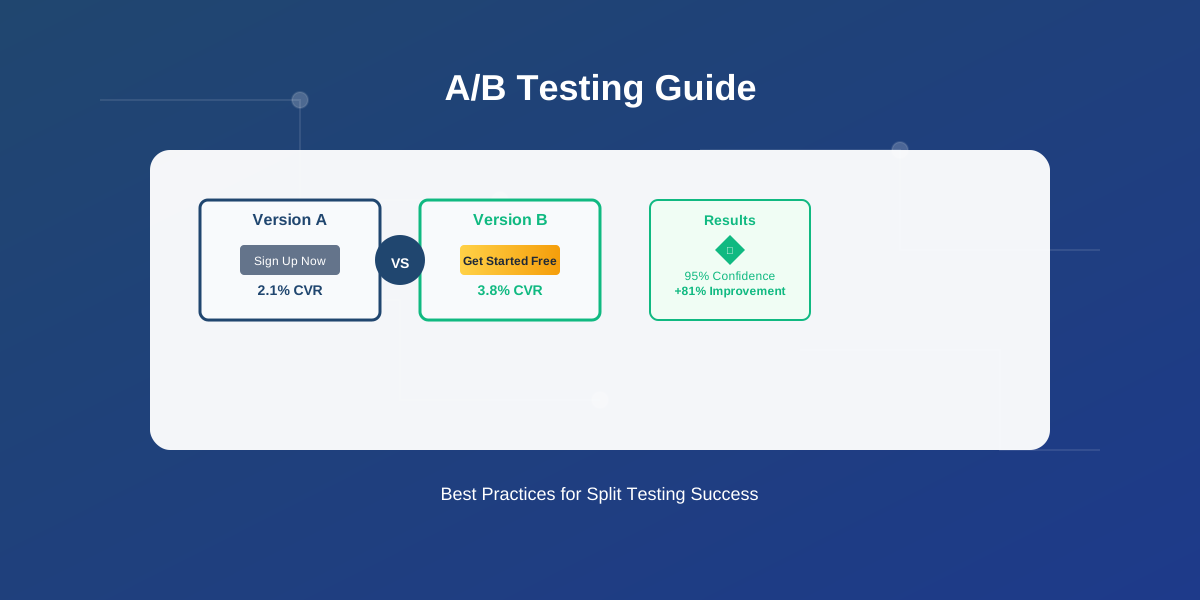
A/B testing, also known as split testing, is a method of comparing two versions of a webpage, email, or other marketing asset to determine which performs better. By showing version A to half your visitors and version B to the other half, you can measure which version drives more conversions.
Why A/B Testing Matters in 2024
- Data-driven decisions: Remove guesswork from optimization efforts
- Measurable ROI: Track the direct impact of changes on revenue
- Risk mitigation: Test changes before full implementation
- Continuous improvement: Build a culture of optimization
A/B Testing Fundamentals
1. Statistical Significance
Never make decisions based on incomplete data. Ensure your tests reach statistical significance (typically 95% confidence) before drawing conclusions.
Key metrics to track:
- Sample size
- Confidence interval
- P-value
- Effect size
2. Test Duration
Run tests for at least one full business cycle (typically 7-14 days) to account for:
- Weekly traffic patterns
- Different user behaviors throughout the week
- Seasonal variations
3. Single Variable Testing
Test one element at a time to clearly identify what drives performance changes:
- Headlines
- Call-to-action buttons
- Images
- Form fields
- Layout changes
A/B Testing Best Practices
Before You Start Testing
- Define clear hypotheses: Start with “If we change X, then Y will happen because Z”
- Set success metrics: Determine primary and secondary conversion goals
- Calculate required sample size: Use statistical power calculators
- Document everything: Track test details, variations, and rationale
During the Test
- Don’t peek early: Resist checking results before statistical significance
- Maintain consistency: Avoid making other changes during testing
- Monitor for technical issues: Ensure proper test implementation
- Account for external factors: Note any marketing campaigns or events
After the Test
- Analyze results thoroughly: Look beyond just conversion rates
- Consider statistical power: Ensure adequate sample sizes
- Document learnings: Record insights for future optimization
- Plan follow-up tests: Build on successful findings
Common A/B Testing Mistakes
1. Testing Too Many Variables
Problem: Multivariate tests without sufficient traffic Solution: Focus on single-variable tests for clearer insights
2. Stopping Tests Too Early
Problem: Making decisions on insufficient data Solution: Wait for statistical significance and full business cycles
3. Ignoring Statistical Power
Problem: Tests with inadequate sample sizes Solution: Use power calculations to determine required traffic
4. Not Segmenting Results
Problem: Missing important user behavior differences Solution: Analyze results by traffic source, device, and user type
Essential A/B Testing Tools
Free Options
- Google Optimize: Basic A/B testing with Google Analytics integration
- Google Analytics: Built-in experiments feature
- Facebook Ads: Native split testing for ad campaigns
Premium Solutions
- Optimizely: Enterprise-level testing platform
- VWO: Comprehensive conversion optimization suite
- Adobe Target: Advanced personalization and testing
- Unbounce: Landing page focused A/B testing
What to A/B Test
High-Impact Elements
- Headlines: Primary value propositions
- Call-to-Action Buttons: Text, color, size, placement
- Images: Product photos, hero images, testimonials
- Form Fields: Number, order, and types of fields
- Page Layout: Information hierarchy and flow
Advanced Testing Ideas
- Social proof placement: Testimonials, reviews, logos
- Pricing presentation: Tables, highlighting, payment options
- Navigation structure: Menu organization and labels
- Content length: Long-form vs. concise copy
- Trust signals: Security badges, guarantees, certifications
Analyzing A/B Test Results
Key Metrics to Evaluate
- Primary Conversion Rate: Your main success metric
- Secondary Metrics: Supporting conversion goals
- Statistical Significance: Confidence in your results
- Practical Significance: Real-world impact of changes
Segmentation Analysis
Break down results by:
- Traffic Source: Organic, paid, direct, referral
- Device Type: Desktop, mobile, tablet
- User Type: New vs. returning visitors
- Geographic Location: Different regions or countries
Statistical Considerations
- Sample Size: Ensure adequate data for reliable conclusions
- Test Duration: Account for weekly and seasonal patterns
- External Factors: Consider campaigns, news, or events during testing
Building an A/B Testing Program
Phase 1: Foundation (Months 1-2)
- Implement testing tools and tracking
- Train team on testing methodology
- Start with high-impact, simple tests
Phase 2: Systematic Testing (Months 3-6)
- Develop testing roadmap and priorities
- Establish regular testing cadence
- Document and share learnings
Phase 3: Advanced Optimization (Months 6+)
- Implement multivariate testing
- Personalization based on test results
- Cross-channel testing strategies
A/B Testing for Different Industries
E-commerce
- Product page optimization
- Checkout flow improvements
- Cart abandonment recovery
SaaS
- Trial signup optimization
- Pricing page testing
- Onboarding flow improvements
Lead Generation
- Form optimization
- Landing page variations
- Call-to-action testing
The Future of A/B Testing
Emerging Trends
- AI-powered testing: Machine learning for test prioritization
- Server-side testing: Faster, more reliable implementations
- Cross-device testing: Understanding multi-device user journeys
- Personalization integration: Dynamic content based on test results
Conclusion
A/B testing remains one of the most powerful tools for conversion optimization in 2024. By following best practices, avoiding common mistakes, and maintaining a systematic approach, you can unlock significant improvements in website performance and lead generation.
Remember: successful A/B testing is not about finding the “perfect” version—it’s about continuous improvement through data-driven decisions.
Ready to implement a systematic A/B testing program? Contact AktivCRO for expert guidance on building a conversion optimization strategy that delivers measurable results.
Tags
AktivCRO Team
The AktivCRO team consists of conversion optimization experts who have helped 100+ businesses achieve 200-400% improvements in website performance and lead generation. Our proven 4-framework system transforms underperforming websites into intelligent problem-solving platforms.
Ready to Optimize Your Website?
Get a free conversion rate optimization consultation and discover how to increase your leads by 200-400%.
Get Your Free CRO Consultation